
01 · VRx
Virtual reality therapeutic medicine
AI-driven, immersive cognitive rehabilitation training (VR-CRT) for patients with mild cognitive impairment linked to cancer, dementia and stroke.
Learn more →
Advancing therapeutic, diagnostic, and biomarker technologies to achieve lifelong mental resilience for patients with cognitive impairment.
The DHx NeuroTech Lab at the University of Cincinnati College of Nursing brings clinicians, engineers, neuropsychologists, medical researchers and computer scientists together to build digital health technologies for memory and brain health.
About the lab →Research record of the lab director
Why it matters
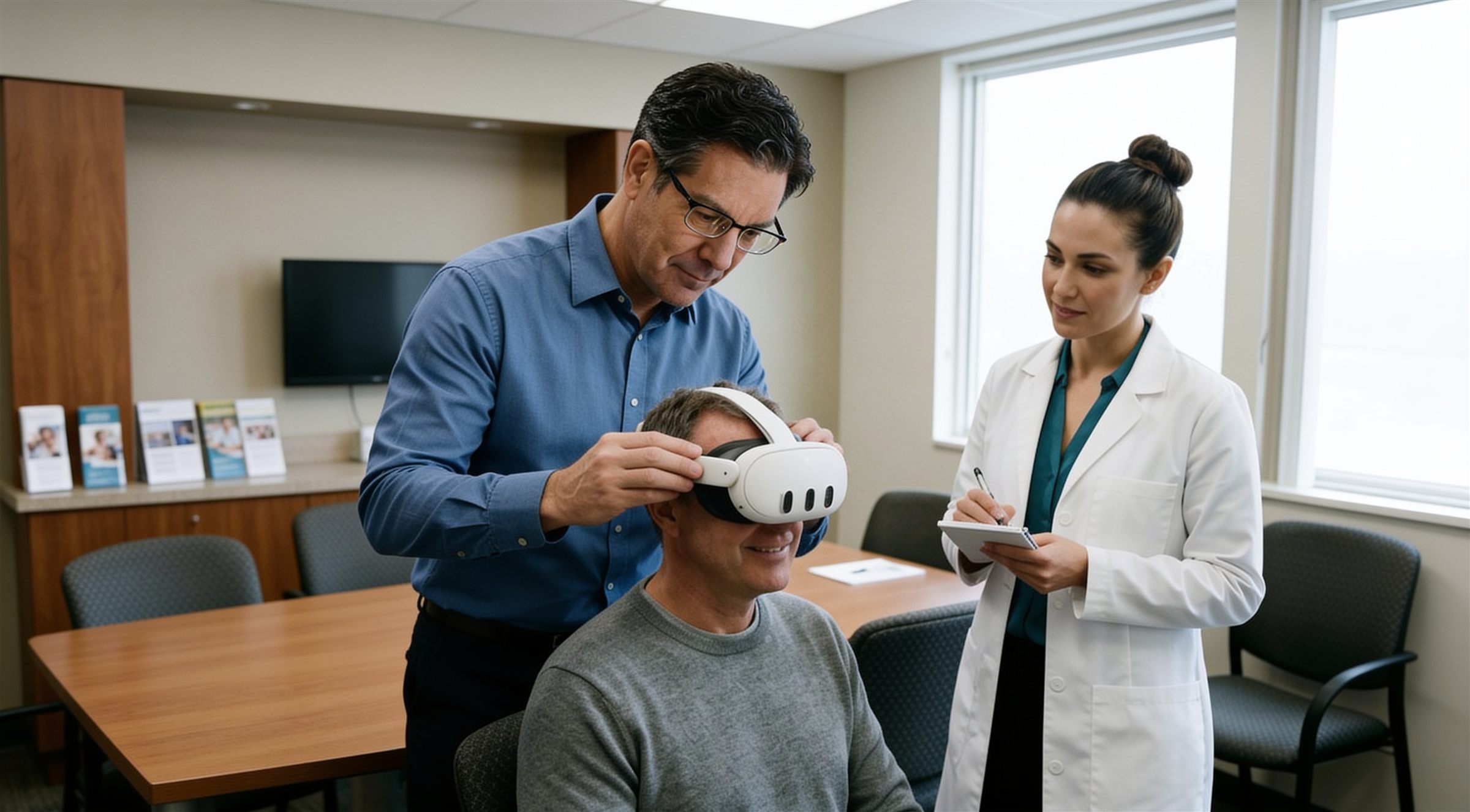
Mild cognitive impairment touches people living with Alzheimer’s disease and related dementias, cancer, and stroke. We design immersive, game-based therapies that train attention, memory and executive function, and that track progress as patients play.
Our virtual reality cognitive rehabilitation training platform, VR-CRT, is being studied with patients at the UC Cancer Center and the UC Gardner Neuroscience Institute. An initial pilot study showed improved verbal fluency, executive function and broader cognitive plasticity.
What we do
Our research sits at the intersection of digital health and biomedical engineering. We lead interdisciplinary teams that design, build and clinically test new technologies for patients in cancer care, cystic fibrosis, and memory and brain health.
01 · VRx
AI-driven, immersive cognitive rehabilitation training (VR-CRT) for patients with mild cognitive impairment linked to cancer, dementia and stroke.
Learn more →02 · VOC biosensors
Handheld smart sensors that read volatile organic compound biomarkers for noninvasive detection, currently in prostate cancer and cystic fibrosis.
Learn more →03 · mHealth
Human-centered apps, portals and dashboards that connect cancer patients and their families with timely care, including FamCare+ and the C4 program.
Learn more →In development
The next generation of our platform pairs immersive exercises with AI, so therapy responds to how each person performs and feels.
Exercises built around predictive performance metrics.
Intelligent non-player characters hold emotionally responsive conversations, using sentiment analysis and brain-health (PROMIS) questions to gather real-time cognitive data.
Player-experience modelling adjusts each game to the patient’s performance.
Physical exercise combined with motor-cognitive tasks to support brain plasticity, memory and motor skills.
The study measures the feasibility and acceptability of a virtual reality game-based cognitive training platform for survivors at risk of mild cognitive impairment.
With Indiana University colleagues, the lab is developing breath-based detection of pulmonary exacerbations using machine learning.
The project identifies volatile organic biomarkers of prostate cancer with portable GC-MS and develops a hand-held nanosensor system.
Our lab brings science, engineering and clinical practice together to turn research into technology that improves care for patients and their families.

Lab Director. Professor, Department of Population Health, College of Nursing, University of Cincinnati.
Member, UC Cancer Center and UC Gardner Neuroscience Institute.
Interested in working with an interdisciplinary team of clinicians, engineers, neuropsychologists and computer scientists? See how students and researchers can get involved.